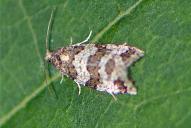
Isotrias rectifasciana (Haworth, 1811)
Aussehen
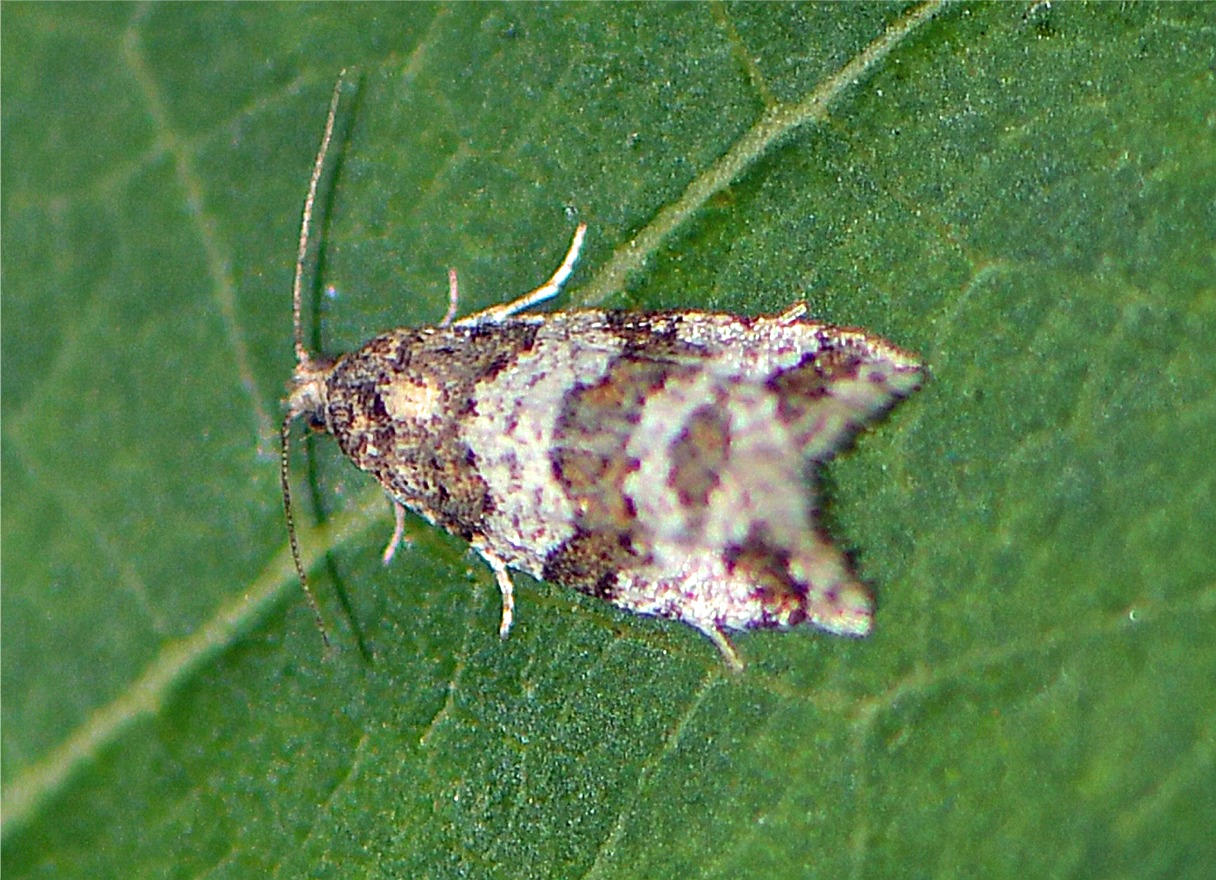
Der Falter erreicht eine Flügelspannweite von 11 - 14mm.
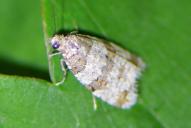
Die Vorderflügel sind graubraun gefärbt und tragen mittig eine auffällige, leicht nach hinten gebogene, dunkle (dunkelbraune) Binde. Auch das Wurzelfeld hat diese dunkelbraune Färbung.
Lebensraum
Laubwälder und Gebüsche.
Bekannte Futtepflanzen der Raupen sind Weißdorn, Ahorn und auch Eiche.
Vorkommen
Europaweit verbreitet.
Der Falter wird im Bundesland Salzburg äußerst selten angetroffen!
Flugzeit
Gefährdung
Auf Grund der Seltenheit muss er als gefährdet angesehen werden (2026).
Synonyme u.a.
Tortrix rectifasciana | Haworth, 1811
Anisotaenia carinthiaca | Prohaska, 1922
Isotrias carinthiaca | (Prohaska, 1922)
Isotrias insubrica | (Müller-Rutz, 1920)
Cnephasia (Eudemis) curvifasciana | Stephens, 1834
Cnephasia curvifasciana | Stephens, 1834
Isotrias curvifasciana | (Stephens, 1834)
Isotrias albulana | (Treitschke, 1835)
Sciaphila albulana | Treitschke, 1835
Isotrias nemorana | (Frölich, 1828)
Tortrix nemorana | Frölich, 1828
Isotrias trifasciana | Donovan, [1806]
Phalaena (Tortrix) trifasciana | Donovan, [1806]
Phalaena trifasciana | Donovan, [1806]
Pyralis trifasciana | Fabricius, 1794
Verbreitung im Land-Salzburg
 Lepiforum.org